
Table Top Rhythms
Lesson 2

In this second lesson we recap over the rhythm we looked at by the body percussion group, Mayumana, and we delve into it’s similarities with Panaderas music from Spain. Music and rhythms become shared globally through the movement of people and cultural crossovers, creating rich, interconnected traditions that transcend borders.
Preparation:
Check and watch each of the video links and check they work and you understand each task.
Lessons are desk based but could be adapted to be on the floor.
Have white boards and pens or paper for each person in the group.
Activity 1 - Warm up
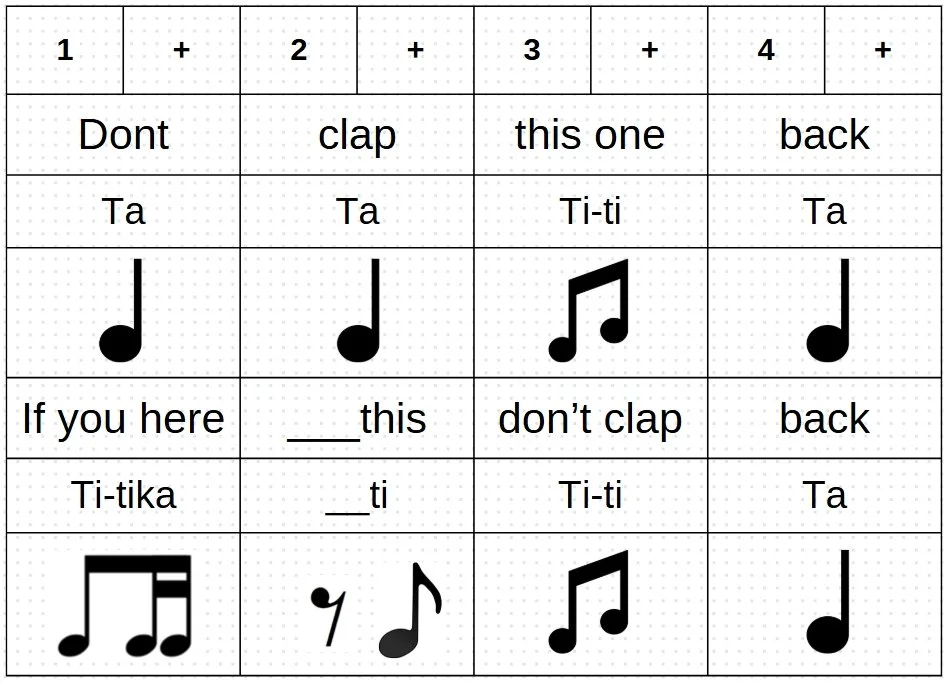
Don’t clap this one back – 5-10 mins
You can either use the video to play this game or, if feeling confident, try leading the group without the video.
If you are playing the game without the video follow these instructions:
The hardest part of playing this game is for the leader to be able to come up with 4 beat rhythms to call and respond in between the ‘don’t clap this one back’ rhythm.
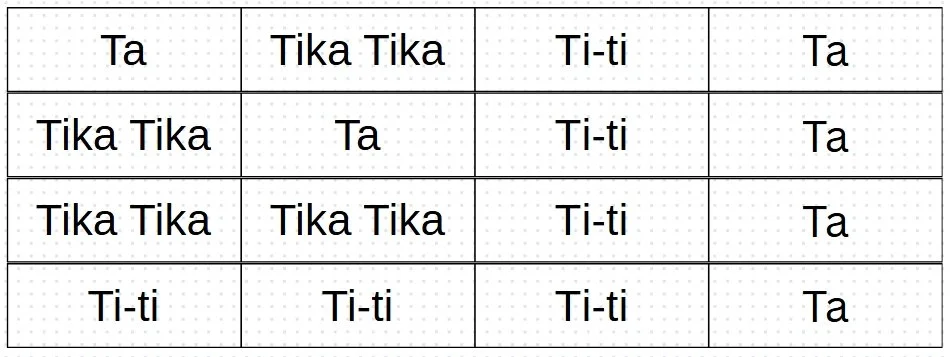
Begin by getting the group, working in pairs, to create 4 beat rhythms by combining any 4 of the following sounds: ta, ti-ti, tika-tika. One person sounds out the four beat pattern and the partner tries clapping it back. Swap around who’s leading.
(There are some examples below)
As they get more confident suggest that they say the sounds in their heads whilst clapping the rhythm out loud.
Once the group have this secure they can move onto to play the game.
Remember rhythm 1 is ‘don’t clap this one back’ and rhythm 2 is ‘if you hear this, don’t clap back’
Activity 2 - Be Inspired 1
Asaran Earth Trio - Las Panaderas – 10 mins
The Asaran Earth Trio is a vocal ensemble blending rich harmonies with global rhythms. Their standout piece, Panaderas, is a traditional Spanish work song sung by women while kneading bread, using tabletops or dough boards for percussion. Rooted in Sephardic Jewish culture before the 15th-century Spanish expulsion, Panaderas rhythms evolved across the Mediterranean and Middle East. The Trio's version closely matches the original rhythm and likely inspired the theatrical interpretation by the body percussion group Mayumana.
Watch the video.
Ask the group to use section 3 of the workbook to make notes.
Ask the group what they notice?
how is this version similar to the Mayumana version?
how is it different?
how many beats can they feel if they count along? what is its measure?
You can watch the second video to help imagine its links with bread making.
Work songs unite labour, build community, and preserve tradition across cultures. From Spanish Panaderas’ rhythmic bread-making songs to African-American field workers’ call-and-response chants, they reflect daily life. In Northern England, fishwives sang lively tunes like “Herrings Heed” to accompany work and celebrate local identity.
Activity 3 - Give it a go!
Ritmo de Panaderas or The Baker’s Rhythm – 10 mins
This tutorial by Carmela Oviedo introduces the Panaderas Rhythm.
Watch the video all the way through once and don’t worry about joining in.
Watch a second time and this time join in.
Let the group practice the rhythm independently without the video.
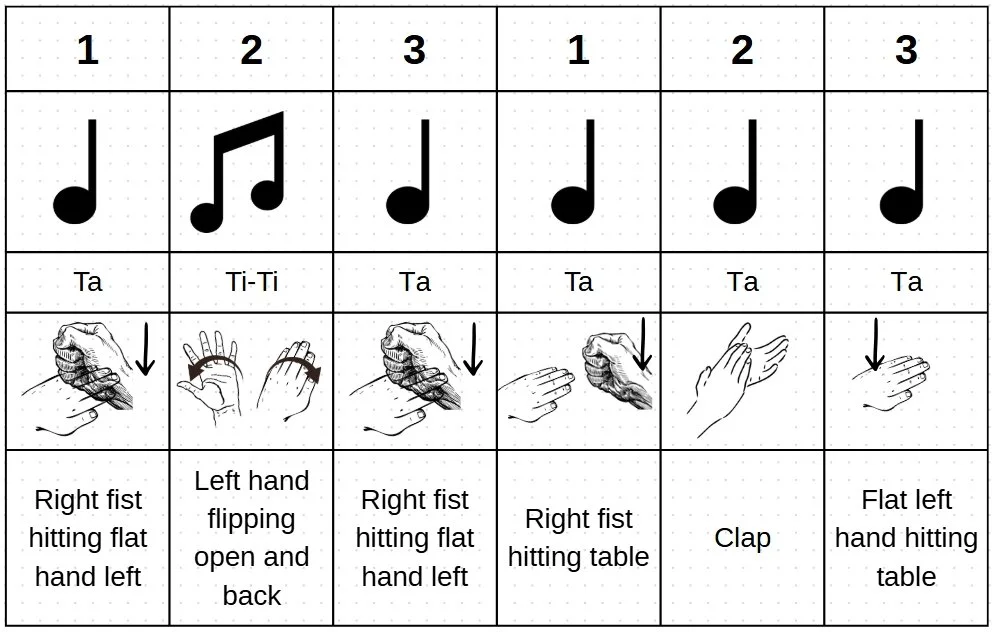
Start with saying the rhythm: Ta Ti-Ti Ta Ta Ta Ta
Then try one beat at a time and start of slower, increasing the tempo (speed) as you get more confident.
Below is the notated version of the rhythm.
Activity 4 - Reflection Time
Reflection Questions: Panaderas and Work Songs - 5-10 mins
Ask the group to spend 5 minutes using section 4 of the workbook to make notes before sharing back as a group.
What do you notice about the rhythm in the Panaderas song? How does it make you feel when you tap it out?
Why do you think people used songs like Panaderas while they worked?
Can you think of a time when music helped you focus or made a job more fun?
What kind of jobs today might be easier or more fun with music or rhythm?